
13 december, 2022 | Auteur: Noémi Prent, Sylvana van den Braak | Trefwoord: lost-in-europe-summerschool
Angels of Palermo - part 1
From town square Quattro Canti to the multicultural district Ballarrò; the capital city of Sicily, Palermo is buzzing. The life of migrant women in this rough port city is not all roses. Behind the scenes, volunteers work hard to help them. The Dutch feminist magazine OPZIJ talks to Osas Egbon, Maria Chiara Monti and Masuma Akther who, despite the setbacks, engage on bettering the life of women in Palermo. For Lost in Europe, we translated the series.
Osas Egbon
You cannot ignore the Nigerian Osas Egbon (1982) in Palermo. She has been living on the island for around nineteen years and is the director of Women of Benin City. This organization supports women who are victim of human trafficking. Egbon is expert by experience and got herself out of her situation, two decades ago. Now, she is determined to help women who went through the same.
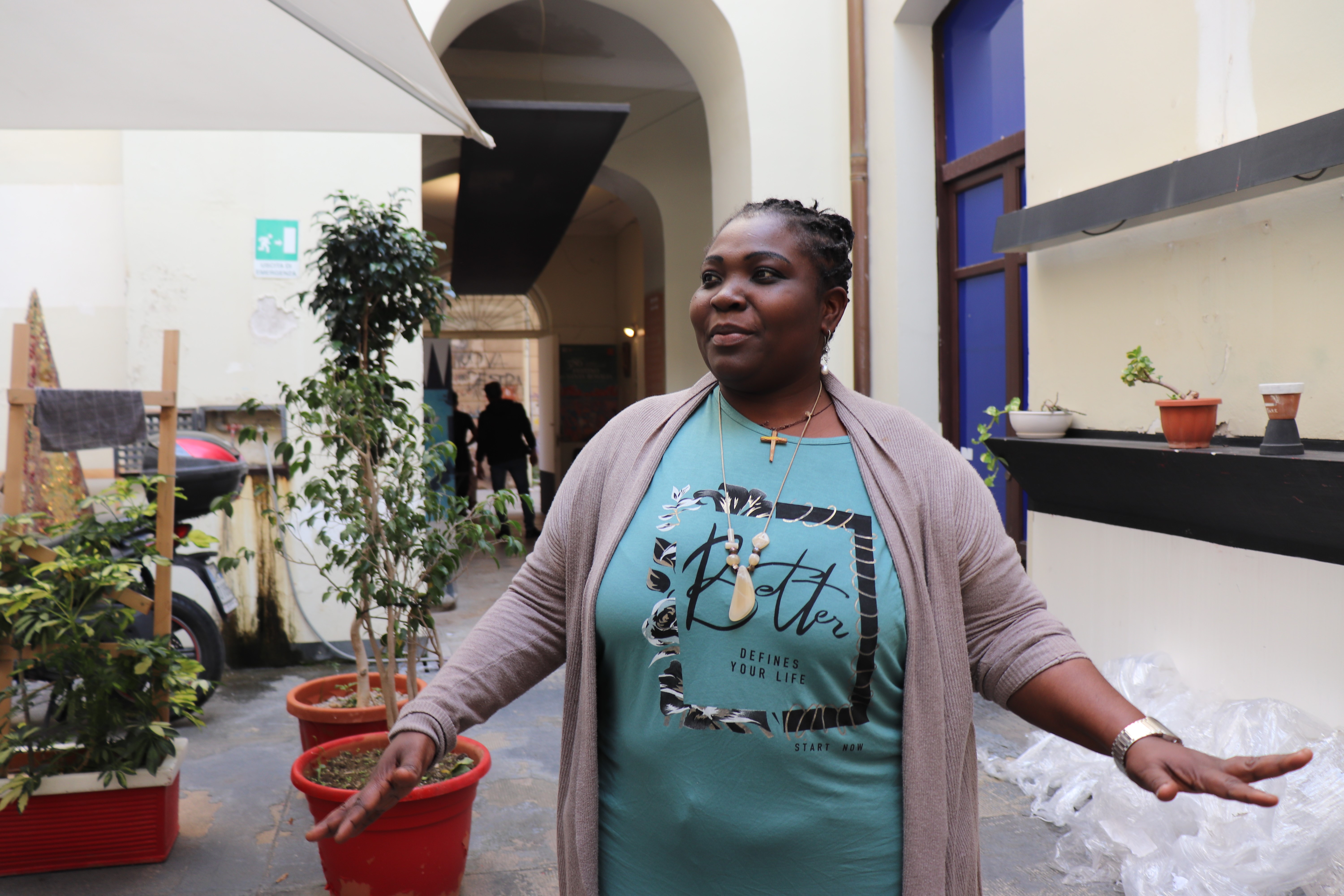
There are currently three women in her safe house, explains Egbon from a modest office in the centre of Palermo. “We give these women a safe place where they can’t be found. The goal for them is to independently rebuild their own life. Because I can’t go to the doctors with them all their life.” Egbon helps and guides the women with their residence documentation, lawsuits, but also to find a job.
Many Nigerian women, who either or not voluntarily cross over to Sicily, end up in Ballarò, the multicultural district of Palermo. There, they illegally work in the so-called ‘connection houses’, where they perform sex work. Often under pressure from the so-called ‘mamas’. Many of them can not escape from the situation because of a huge debt with their human trafficker and moreover, do not know any way to earn money. Egbon denounces the local municipality, which does not do enough to take down these connection houses and and tackle the traffickers. “While the police often know they are there,” she explains. Several years ago, Egbon decided to step to the media, to put pressure on the police. “After I approached the media and after the publications it all went faster,” Egbon recalls laughing.
“Unfortunately, there are still connection houses, but there are a lot fewer than a few years ago.” The owners of these illegal brothels are not happy with Egbon’s work. “I’m going to deal with you, they say. I say: Sure, come. I will be there.” Egbon does not seem to be afraid of the devil.
Women of Benin City
Egbon got taken care of by the Redd Cross after paying off her debt to human traffickers. “They save you, but eventually you are on your own. A lot of women end up on the streets, because they just don’t know how things work around here. Some of them don’t even know that the sex work they perform, is illegal here.” Because of that reason, Egbon partially founded Women of Benin City. “A lot of NGO’s are active when women arrive, but stop helping after a while. It is important that these women are not alone after such a traumatizing event.”
According to Egbon there are many differences between the cultures in Italy. “I know my country, culture and my people.” It is trial and error with the funding of Women of Benin City, she says. “We basically run on volunteers and thus depend on donations and grants. My goal is to become a professional organisation.”
Egbon recently struggled with the payment of gas- and electricity bill of her safe house. “That’s why we put up a donation plea.” Yet, the director of Women of Binin City knows how to tie the ends together. “It’s not easy, but I have to do it.”
Last year, the women department of the Palestinian police donated to Egbon. “I have good contact with them. They know what I do.”
Foodbank
When Covid-19 shook things up in Palermo Egbon started a foodbank with a few others. The foodbank is located in a few spaces of a local charity, in the centre of Palermo. Jars filled with pastasauce, bags full of rice and milk; every Friday, volunteers sort groceries to help people fill their fridge. “The foodbank is there for everyone who needs it,” says Egbon. “There are a lot of (migrant)women who knock on our door for help.” A lot of these women don’t make enough money to provide their daily maintenance. Their financial situation has gotten worse over the past years. “But because our foodbank, they have enough food to feed their family.”
This production has been made as parts of VersPers Reizen. Made possible by the Steunfonds Freelance Journalisten.
Gerelateerde artikelen
Angels of Palermo – Part 3
The Dutch feminist magazine OPZIJ talks to Osas Egbon, Maria Chiara Monti and Masuma Akther...
lees verder
Angels of Palermo – Part 2
The Dutch feminist magazine OPZIJ talks to Osas Egbon, Maria Chiara Monti and Masuma Akther...
lees verder
De smaak van migratie in Palermo
Hoe migratie in Palermo culinair nationalisme in Italië doorbreekt
lees verder