
8 april, 2026 | Auteur: Clarine van Karnebeek | Beeld: Geesje van Haren | Trefwoord: europa
Taming the water is no one’s priority – how and why flood victims feel abandoned
A European strategy to prevent and adapt to flooding is left to intentions. No specified funding is set aside in the proposed next long-term budget.
By Staffan Dahllöf, Katharine Quarmby, Nicoline Noe, Marcos Garcia Rey, Krzysztof Story, Clarine van Karnebeek and Tommy Greene
The triple threats of too much, too little and too polluted water has called for a broad European water resilience strategy. This is also the title of a central EU-document released by the Commission in June 2025.
The strategy is a declaration of intentions, not a proposed legislation. No suggested money is attached.
“Not flowing, not funded, EU Water Resilience Strategy falls short”, commented the European Environmental Bureau, a network of 190 environmental organisations in 43 countries.
The Commission will convene a biennial Water Resilience Forum to bring stakeholders together, and evaluate progress made in 2029. Environment ministers in the Council has called for “stronger coordinated action”. But by whom and how, remains to be seen.
The Parliament has no real say, as the strategy is not a legislative act but has expressed its views.
At national levels it is equally difficult to identify who is responsible for what.
The effect of EU farm subsidies
In Poland, mountain streams are governed by one institution, Wody Polskie. (Polish Water Management Authority). Trees growing on river banks are governed by another, Lasy Państwowe, State Forests, a governmental organisation that covers about 77.8% of Polish forests.
“The State Forests is very passive when it comes to water and flood issues. Hundreds of forest roads, wide enough for tree-harvesting machines, have been built in the last years. In a flash flood they transform into full-scale rivers in matter of hours”, says Janusz Zaleski, professor of technical science at Wrocław University of Science and Technology.
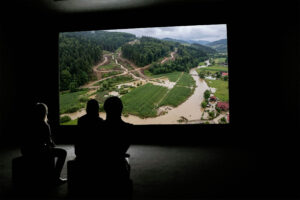
A big Polish culprit has been the direct payments to farmers since Poland became an EU member in 2004. Corn is now grown widely, even if it meant drying out the few natural wetlands.
“Around 95% of our natural wetlands have been affected at least partially”, says Dr Łukasz Kozub, Head of the Wetlands Conservation Centre.
Adam Ulbrych, a specialist in nature retention, argues that renovating old irrigation systems upstream a river by using virtually nothing more than wooden planks to deviate water, can retain the same amount of water as big concrete reservoir a few kilometres down – and it can be around 10 times cheaper.
Rural and urban perspectives
In Spain there is a similar gap between what is done and what is needed, although circumstances differ.
Urban planning or the lack of it, has worsened flood risks. Large areas of flood-prone land were reclassified and built on during the 1997–2007 housing boom, often ignoring official planning and environmental safeguards, argues Fulgencio Cánovas, a geographer who specialises in flood research at the University of Almería.
“The planners are turning people’s homes into death traps: residents will not be able to escape because the street-facing sides are barred with metal grilles”, he says.
This illustrates a conflict between urban and rural areas in Spain. This is to some extent also mirrored in Poland where logging in the mountains has worsened the flooding of lower region.
In Spain difficulties for traditional farming in the upper areas of a river basin have worsened the effects of the heavy rainfall downstream the rivers. Critics in Spain put a blame on a misinterpretation of UN Global agenda by what they call ecologist amateurs, because farmers have been prevented of clearing streams, rivers and riverbanks.
Local versus central administrations
Adding to the difficulties in Spain comes the lack of coordination between local and central authorities. They never meet, claims José Francisco Sales, Head of Technical Services at Valencian Farmers Association.
“There is a major confrontation between the Partido Popular [governing the Valencia region,red] and the Partido Socialista [in charge of the central government in Madrid,red]. Actions have been taken in a disjointed way”, he says.
This disconnection between authorities, is not only found in Poland and Spain.
In the Netherlands, Daan Prevoo, mayor of Valkenburg in South Limburg wanted to set up a bridge to evacuate his citizens during the recent flooding. The mayor had to go to Maastricht twice for meetings with crisis officials. He thought it was absurd but agreed. In the end the bridge only arrived after four days, far too late.
In Denmark more than half of the population lives within 5 kilometres of the coast.
“As climate change is currently developing, it could become Denmark’s greatest, most complex, and therefore most dangerous challenge in this century. Here, I miss a much stronger sense of realism. Many people are simply unaware that they live in an area at risk of flooding”, says Sebastian Mernild, Professor of Climate Change at the University of Southern Denmark.
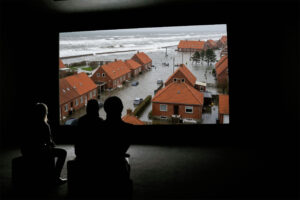
Mernild who has contributed to the IPCC reports since 2010 is particularly concerned about social cohesion: “Flooding hits unevenly. Low-income families don’t have the means to help themselves. It is those with resources who can barricade themselves against the water”, he asks.
No data, no action
During a cloudburst in 2011, rainwater and sewage were forced up through the sewers and settled like sludge in Copenhagen the capital.
“That event made everyone realise that we are facing a future for which we are completely unprepared”, says Anja Colllin Højen, Area Manager for Wastewater Planning at the utility company Hofor.
The Floods Directive, an EU legislation, in Denmark only covers floods from the sea and watercourses, not heavy rain. There is no comprehensive overview of the sewer system as data belong to the individual utility companies. The overall readiness is left unattended, criticized by the National Audit Office in 2023, and acknowledged by the Environmental Protection Agency.
In England, flood and coastal erosion policy falls under the remit of the Department for Environment, Food and Rural Affairs (DEFRA).
Local authorities often find themselves on the front line of flood response, making them the most visible—and frequently the most scrutinised—level of government. This means that blame often falls on those closest to the communities affected, regardless of where the ultimate responsibility lies.
The division of tasks and responsibilities is also fragmented on a central European level.
No EU-funding in sight
Jessica Rowall, commissioner for the environment and water resilience is responsible for the water resilience strategy. Yet no less than five other commissionaires are involved in the related issues climate actions, alerts, emergency support, green transition and crisis management.
Asked how the prevention and adaption costs will be covered the Commission Spokespersons’ Service points at various existing sources; support to poor regions (“cohesion”) agricultural subsidies, and the science program Horizon.
Environmental organisations, the European Parliament and climate expert Kirsten Halsnæs have raised fears that flooding damage will be left uncovered by the EU-budget. The European Commission comments and the lack of denials about funding indicate there are grounds for these fears.
Team members, their national publications and upcoming reporting from the investigation at https://www.ir-d.dk/2025/10/after-the-floods/ The production was supported by a grant from the Investigative Journalism for Europe (IJ4EU) fund.

Schrijf je in voor de nieuwsbrief
Draag bij aan onafhankelijke journalistiek
Investeer in onze makersGerelateerde artikelen
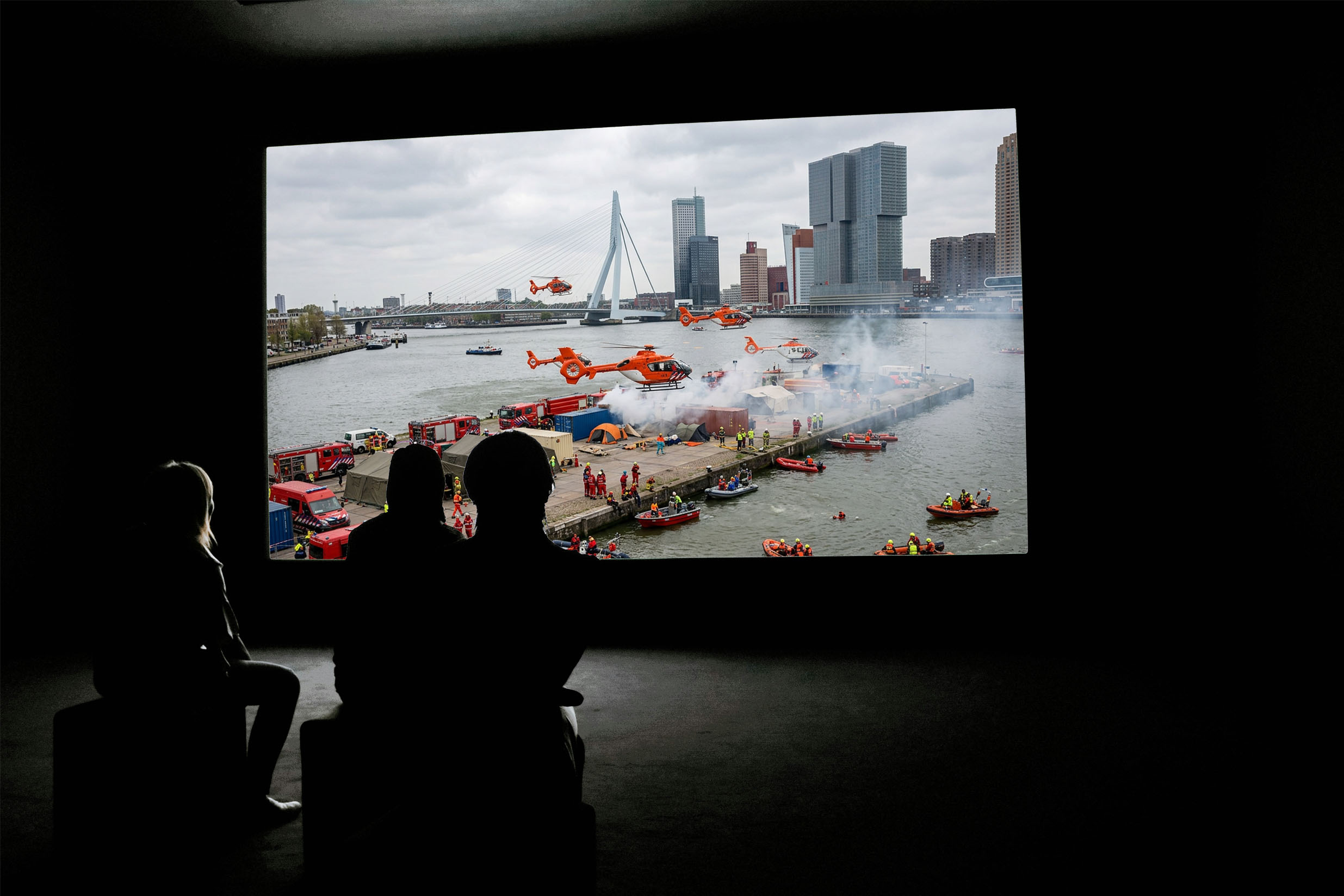
Rotterdamse wijk Bloemhof oefent met rampscenario’s
Crisisoefening in de Rotterdamse wijk Bloemhof toont: Nederlanders zijn nog onvoldoende voorbereid op een 72...
lees verder
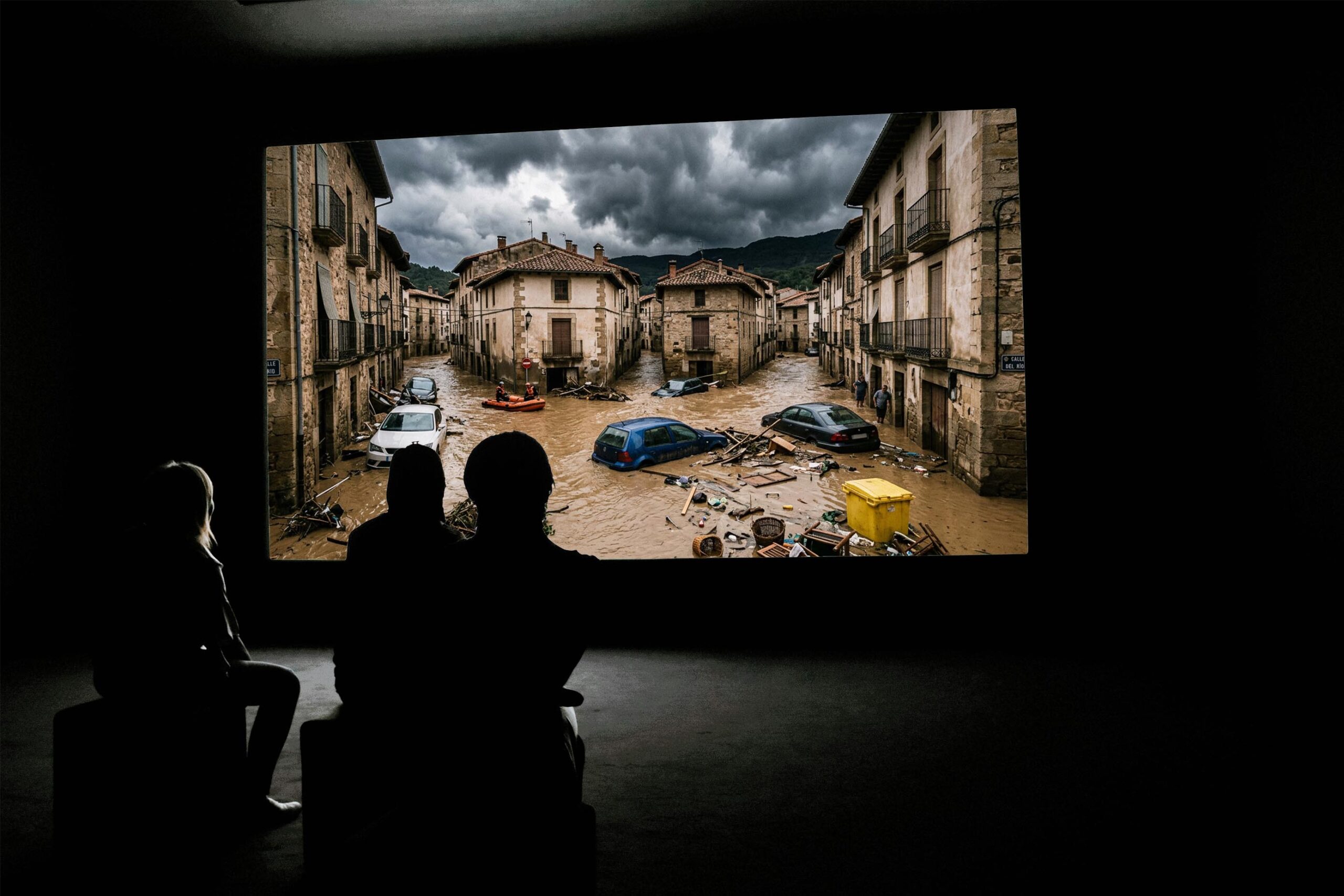
How Europe risks losing the battle against rising waters
Floods are taking lives, threatening health, destroying properties and ruining communities. Adaption to the biggest...
lees verder
Aardbevingsslachtoffer Turkije
Sinds de verwoestende aardbeving in zijn geboorteland, twee jaar geleden, waardeert Bülent Ünlü meer dan...
lees verder