
2 april, 2026 | Auteur: Clarine van Karnebeek | Beeld: Geesje van Haren | Trefwoord: europa
How Europe risks losing the battle against rising waters
Floods are taking lives, threatening health, destroying properties and ruining communities. Adaption to the biggest natural disaster in Europe is fragmented, an investigation in six countries shows.
By Staffan Dahllöf, Katharine Quarmby, Nicoline Noe, Marcos Garcia Rey, Krzysztof Story, Clarine van Karnebeek and Tommy Greene
Flooding is Europe’s most serious natural disaster, yet the response is scattered between different authorities. Flooding also disproportionately affects poorer communities, both in terms of the likelihood of being flooded and in terms of recovery from a flood event.
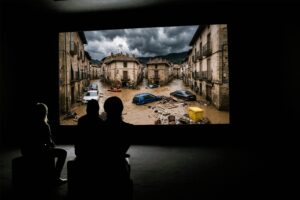
The 2024 catastrophic flash floods in Spain claimed approximately 237 lives and caused extensive property damage across the region. This disaster ranks among the deadliest natural calamities in Spanish history.
This cross-border investigation examines flooding across eight European countries, reveals how Europe is responding to one of the most urgent and complex consequences of climate change.
Spanish scientists predict history will repeat itself not only in Spain but in large parts of Central Europe.
The mechanism is known in Spain by the widely used term DANA (Depresión Aislada en Niveles Altos), [Isolated Depression at High Altitudes, red]. A cold drop is an isolated mass of cold air that produces intense storms and heavy rainfall when it moves over warm regions.
”We have a situation that’s like a monkey with a bazooka in its hands. We are waiting to see where it’s aiming and where the storms are going to hit”, says physicist and oceanographer Antonio Turiel.
A strategy of wilful blindness?
The EU’s Copernicus programme which provides information from space about the environment and noted an exceptional marine heatwave in the western Mediterranean Sea in June 2025. This led to the highest daily sea surface temperature ever recorded in June for the region: 27.0°C (+3.7°C above average).
As the atmosphere warms, the concentration of water vapour also increases. This amplifies a feedback loop that fuels more intense rainfall events. Heavy rainfall has also left its mark on Central and Eastern Europe, where a combination of steep terrain and interventions in the natural flow of water has resulted in sudden and deadly flooding.
According to the European Environmental Agency the average global sea level has risen by approximately 21 centimetres since 1900. The rate of increase continues to accelerate leading to more severe coastal flooding.
63 centimetres or 300?
Yet a recent study by some of Denmark’s leading climate scientists based on ice core research describes these projections as highly misleading. The study indicates that sea level rise could be three times worse than expected.
“Even with temperature increases of just two to three degrees, we may face unavoidable collapses of parts of the world’s ice sheets”, says professor Dorthe Dahl-Jensen, an expert in Ice, Climate and Geophysics at the University of Copenhagen.
That floods comprised 43% of all disaster events in Europe 1998-2020, does not come as news to the affected areas. All over Europe there are recurring events caused by too much water in the wrong places.
“We don’t know if it is an area that anybody will ever want to live in again”
However, the consequences depend on geography, budget, policy agreements, preparedness and adaptation. Janusz Zaleski, Professor of technical science at Wrocław University of Science and Technology, specialises in water policy, says: “Poland has had an ostrich strategy for a long time, putting its head in the sand. There was enormous resistance to reservoir investments from environmentalists, and when people started shouting about flooding, we built and raised embankments. But by building embankments, you protect yourself, but you flood your neighbour downstream.”
Who can be blamed?
In October 2023, Brechin, a Scottish town in eastern Scotland in the UK, was hit by a wall of water that changed it forever. The resulting flooding damaged some 189 homes, including houses, flats and caravans, and more than 1,000 residents were evacuated.
“We don’t know if it is an area that anybody will ever want to live in again”, Jill Scott, a local councillor, tells. Although no longer a member of the EU, the UK is still regulated by the two major planks of EU legislation – the Floods Directive and the Water Framework Directive.
In the UK in particular, the concept of flood poverty has also emerged, focussing attention on how factors such as socio-economic deprivation can increase both likelihood of flooding and complicate recovery from an event.
An incoming Labour administration wasted no time in honouring a manifesto commitment to form a UK-wide Floods Resilience Taskforce. On the other hand, the government is proud of its commitment to build 1.5 million homes in the next few years, despite experts warning that a significant number will be built in flood plains.
Like sitting ducks
In Ireland, the record-breaking Storm Éowyn in early 2025 served as a reminder as regards Ireland’s lack of preparedness. Major cities like Dublin, Cork and Galway were described as “sitting ducks” – dangerously vulnerable to climate-driven disasters but, spared so far by little more than luck, experts recognise.
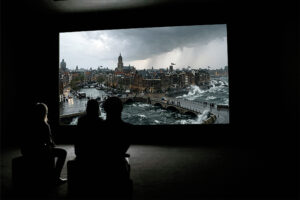
The threat of flooding is significant in the Netherlands, literally the lowlands. Flooding and water damage caused by heavy rainfall, such as in South Limburg, are difficult to predict and to prevent.
Daan Prevoo, mayor of Valkenburg in South Limburg, believes that four years after floods in the region, his municipality is still not well prepared for a similar disaster. In fact, many victims from that time are still struggling with the physical and mental consequences. “Residents of my municipality take pills to sleep and pills to get through the day. The disaster after the disaster is the worst”, he says.
The situation is equally complex regarding available data on a European level. Satellite images and land-based observations are collected and processed by Copernicus, the EU’s earth observation program.
The space perspectives and the local
Copernicus gets data from EU-member countries. But the risk levels are not clearly defined or harmonised. That creates systemic challenges.
“What is high risk and what is low is decided by each member state. From a pure scientific angle, we would like to have a clear harmonised definition for all. But there are different local factors to consider. Flood risk in Finland is another matter than in densely populated Belgium and the Netherlands”, report sources who asked not to be quoted directly.
Another challenge is the importance of very local data: “If the extreme flood in Valencia had happened only a few kilometres away the outcome would have been very different”, experts tell.
Kirsten Halsnæs, professor of Climate and Economics at the Technical University of Denmark is one of the scientists who have participated in the UN’s Intergovernmental Panel on Climate Change. She is sceptical about the value of relying on centralised data. “Data models should to a greater degree reflect the knowledge and priorities that exist locally, rather than what you can derive from a general model”, she says
This puts focus on the EU’s role as a coordinator, legislator and possible provider of the necessary means. Climate scientist Kristen Halsnæs, does not see EU as a major actor: “I certainly do not expect the EU to allocate money for climate adaptation. In that case it is not necessary for investments to be comparable across member states,” she says.
Find out more about the team members, their national publications and upcoming coverage of the investigation at https://www.ir-d.dk/2025/10/after-the-floods/. This project was made possible by a grant from the Investigative Journalism for Europe fund (IJ4EU).
Schrijf je in voor de nieuwsbrief
Draag bij aan onafhankelijke journalistiek
Investeer in onze makersGerelateerde artikelen
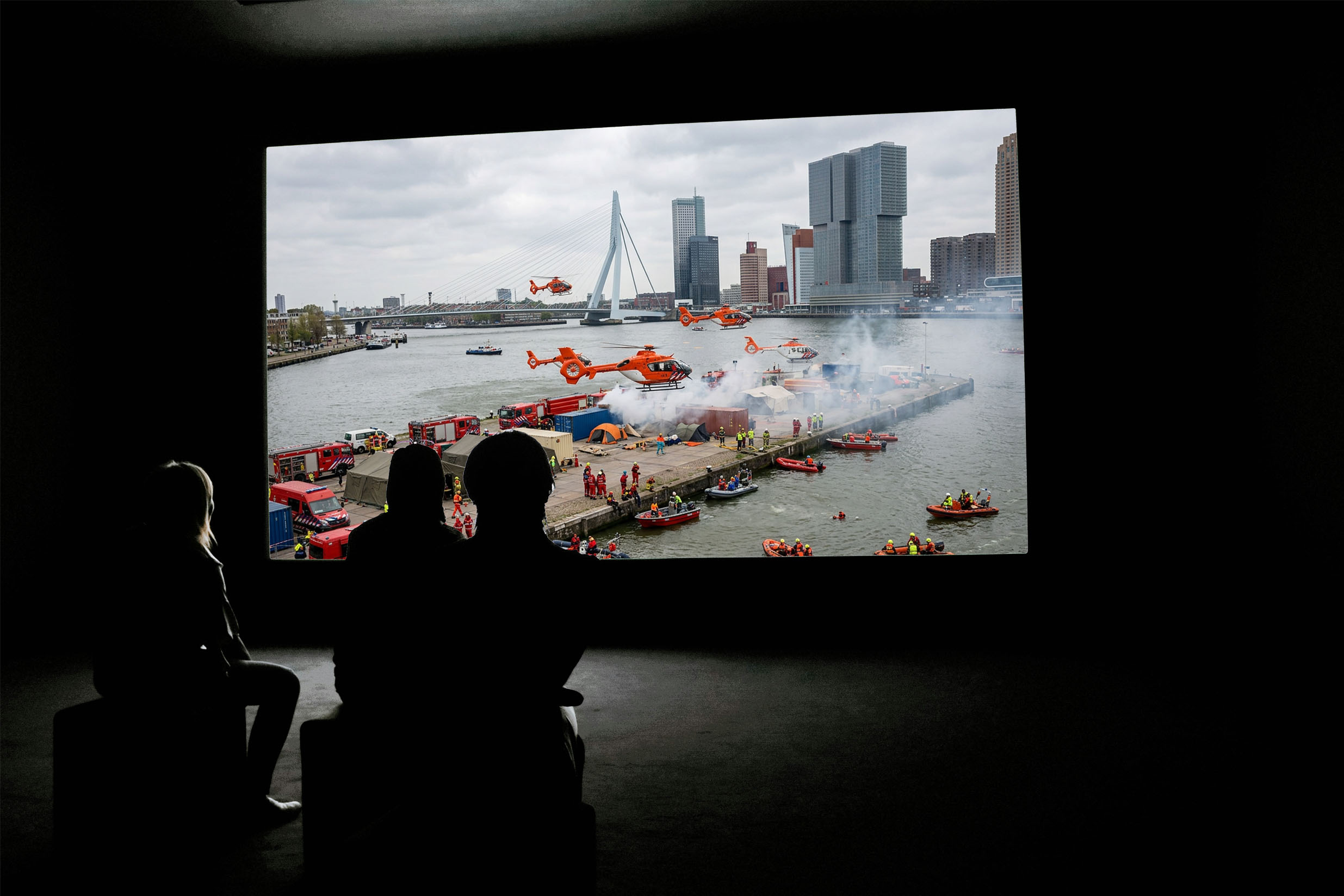
Rotterdamse wijk Bloemhof oefent met rampscenario’s
Crisisoefening in de Rotterdamse wijk Bloemhof toont: Nederlanders zijn nog onvoldoende voorbereid op een 72...
lees verder
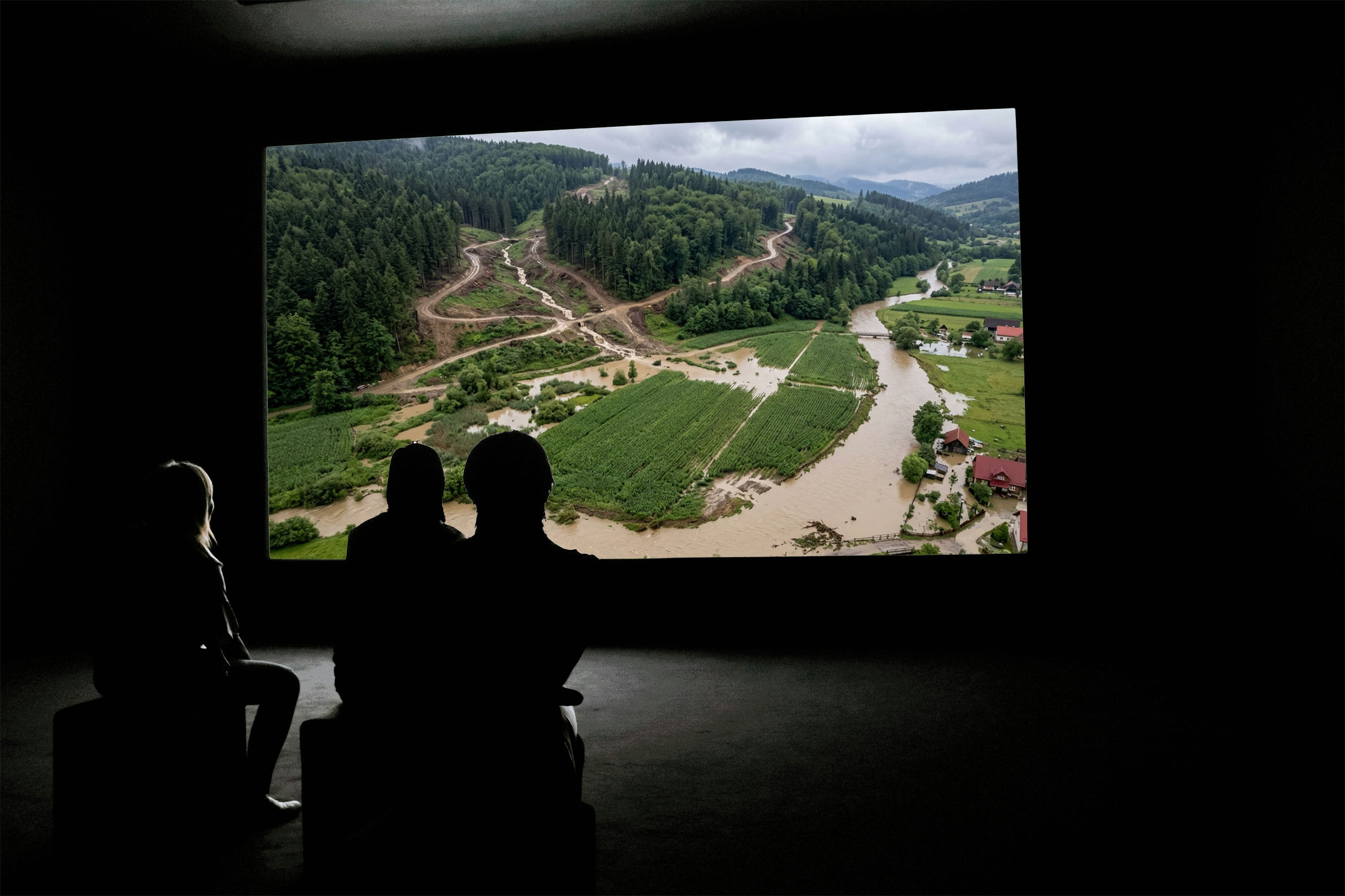
Taming the water is no one’s priority – how and why flood victims feel abandoned
A European strategy to prevent and adapt to flooding is left to intentions. No specified...
lees verder
Aardbevingsslachtoffer Turkije
Sinds de verwoestende aardbeving in zijn geboorteland, twee jaar geleden, waardeert Bülent Ünlü meer dan...
lees verder